
The Problem
You are not behind because you lack good people, good intentions, or good ideas.
You're lacking an image and map of what's going on.
You are carrying it all. The decisions, the direction, and the pace all runs through you. Your team is capable, but somehow everything still ends up back on your desk. You know something has to change, and you have the drive to change it, but you can't put your finger on it.
We typically reach for the next best solution in this moment. A new approach, new hire, new tech, new process. None of it sticks, because they are bandaids on core issues that have not been properly identified.
It's nearly impossible to see your organization clearly on your own. No one can. Your experience of it and your team's experience of it are different, and the gap between them is where the real work lives.
You need an xray before you need a treatment plan.
No Baseline
You are making daily decisions about that impact your the use of your time, finances, and team without a clear read on where things actually stand. Gut feeling is not a data point.
The Team Won't Tell You
Leadership dynamics are real. People tell leadership what leadership wants to hear. The real picture, the one your team actually carries, is hard to surface in the room where decisions get made.
No map, No Plan
You can feel there are gaps, but you cannot name them. So you invest in solutions without knowing if they are the right ones. The effort is real. The return is not.
THE FRAMEWORK
A healthy organization is an aligned group of people consistently doing the right things, the right way, at the right time. The Baseline Organization Health Assessment measures this status across three core competencies and seven subcategories.

Clarity
Purpose · Direction · Expectations
Why the organization exist, what success looks like, what you do, and how exactly you do it. Three subcategories: Purpose, Direction, Expectations.

Communication
Rhythm · Discipline
How information moves, how meetings function, and how decisions get made and followed through. Two subcategories: Rhythm, Discipline.

Culture
Collective · Individual
How the team works together and how individuals experience the organization. Two subcategories: Collective, Individual.
WHY IT WORKS
What makes this assessment different.
The picture is only useful if you can trust it, read it, and act on it.
Confidential by Design
Your team is empowered to answers honestly because I am not on your payroll and the raw data and direct quotes are never shared with leadership. That is not a courtesy, it is how you get honest and valuable responses.
Full Picture
Leadership and team both complete the assessment. The gap between how leadership perceives the organization and how the team experiences is specifically measured and is often the most valuable insight in the entire instrument.
Anchored by Numbers
Every subcategory produces a 1 to 5 score with traffic light thresholds. Green means healthy. Amber means at risk. Red means critical. You get facts, not consultant impressions.
Explained by Narrative
Scored questions give you the what. They do not tell you why. Open ended responses surface the patterns, themes, and language your team is using to explain their reasoning. With this yoyu leave knowing the score, what is driving it, and the highest leverage next steps to move it.
The Floor Rule
The Overall Health Score is not an average. It is set at the lowest category score. The lowest competency defines the health floor. This keeps the standard high and the priority clear.
Leader Limit
Every section includes a question measuring how the team experiences leadership's effectiveness in that area. The composite score identifies exactly where your leadership focus will have the greatest leverage on team performance, and where the highest potential is waiting to be unlocked.
THE PROCESS
2-3 weeks. Four phases. One clear picture.
This is a managed engagement, not a form you send out and hope people fill in. I run the entire process setup, distribution, analysis, and presentation.
Step 1
Setup
We configure the assessment for your organization, establish participant groups, and distribute the form. Setup takes 1 to 3 days.
Step 2
Submission Window
Your team and leadership complete the assessment independently. Typical window is 5 to 7 days. Confidential responses only.
Step 3
Analysis
I analyze the full data set, run the scoring logic, identify developmental flags, and build the report.
Step 4
Presentation
I present your scored results, the primary constraint, and a prioritized development plan directly to leadership.
WHAT IS INCLUDED
Five deliverables. All of them actionable.
This is not a report you file away. It is a scored picture and a prioritized plan. Here is exactly what lands in your hands.
Executive Summary
The top level picture of where your organization stands. Overall health score, category breakdowns, Leader Limit, the leadership vs team perception gap, critical insights, and prioritized next steps. The whole story on one page.
Leader Limit Score
A composite score showing where leadership focus will have the greatest leverage on team performance. It points directly to the highest-potential development opportunity in the organization.
Category Deep Dives
A complete analysis of each competency: Clarity, Communication, and Culture. Subcategory scores, question level results, qualitative themes from open responses, and improvement priorities specific to that category. The detailed view where the real diagnostic work happens.
Prioritized Development Plan
Leadership Debrief Session
A facilitated 60 to 90 minute presentation and consult session with Jeremy covering results, the primary constraint, and the recommended path forward.
Jeremy Rivers
YOUR FACILITATOR
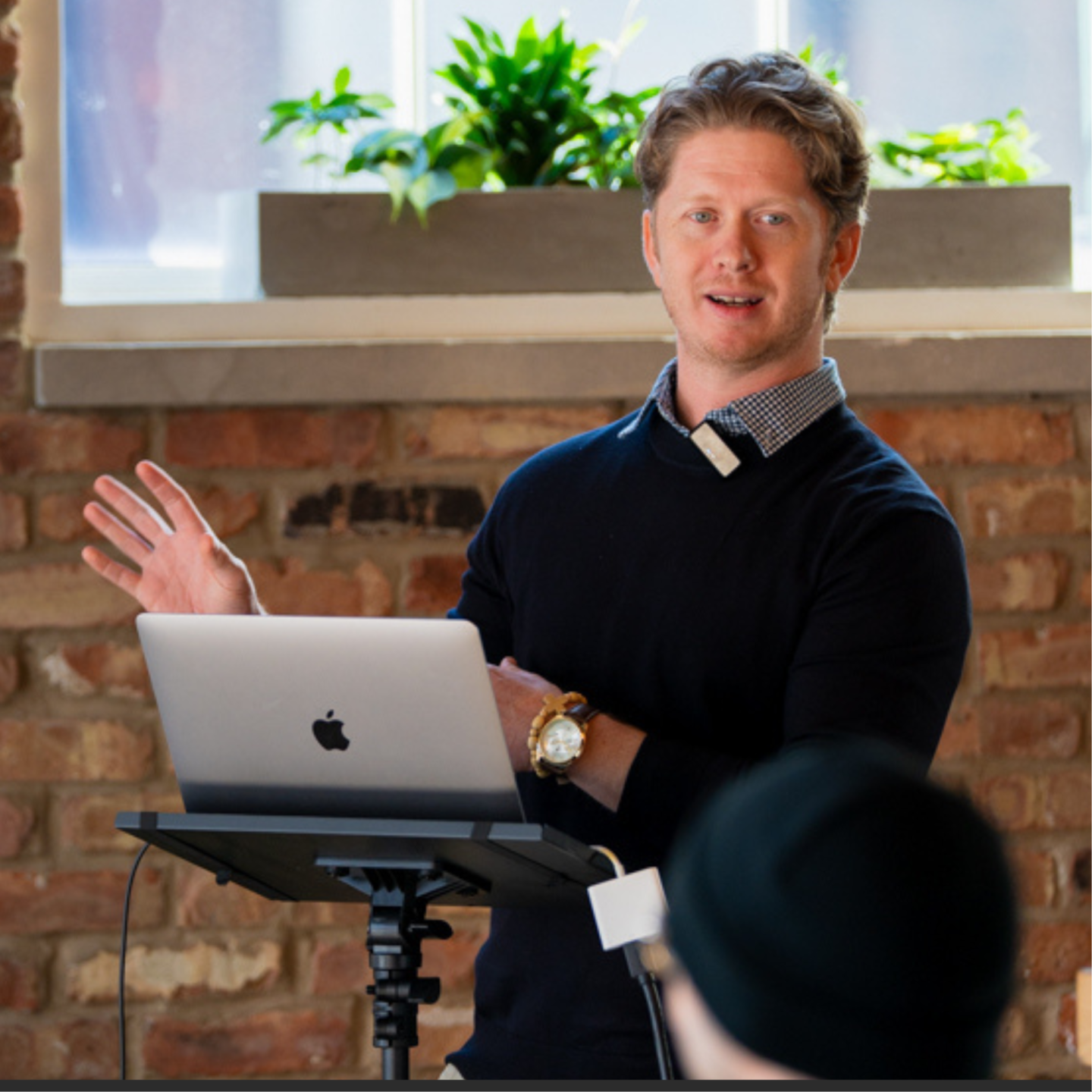
Jeremy Rivers is a fractional COO, executive coach, and organizational health consultant with 20 years of leadership and operational experience across nonprofits, growing organizations, and complex team environments. His work sits at the intersection of strategy, operations, and team development. He designed the Frontier Framework out of what actually worked in the real world, not a classroom. The assessment methodology behind it has been field tested with leadership teams for over a decade. He holds leadership and business strategy credentials from Harvard, MIT, and the University of Illinois, and is a certified executive coach through the International Coaching Federation and the John Maxwell Company.